The question
Does Helicobacter pylori infection cause peptic ulcers?
This is the specific idea being tested.
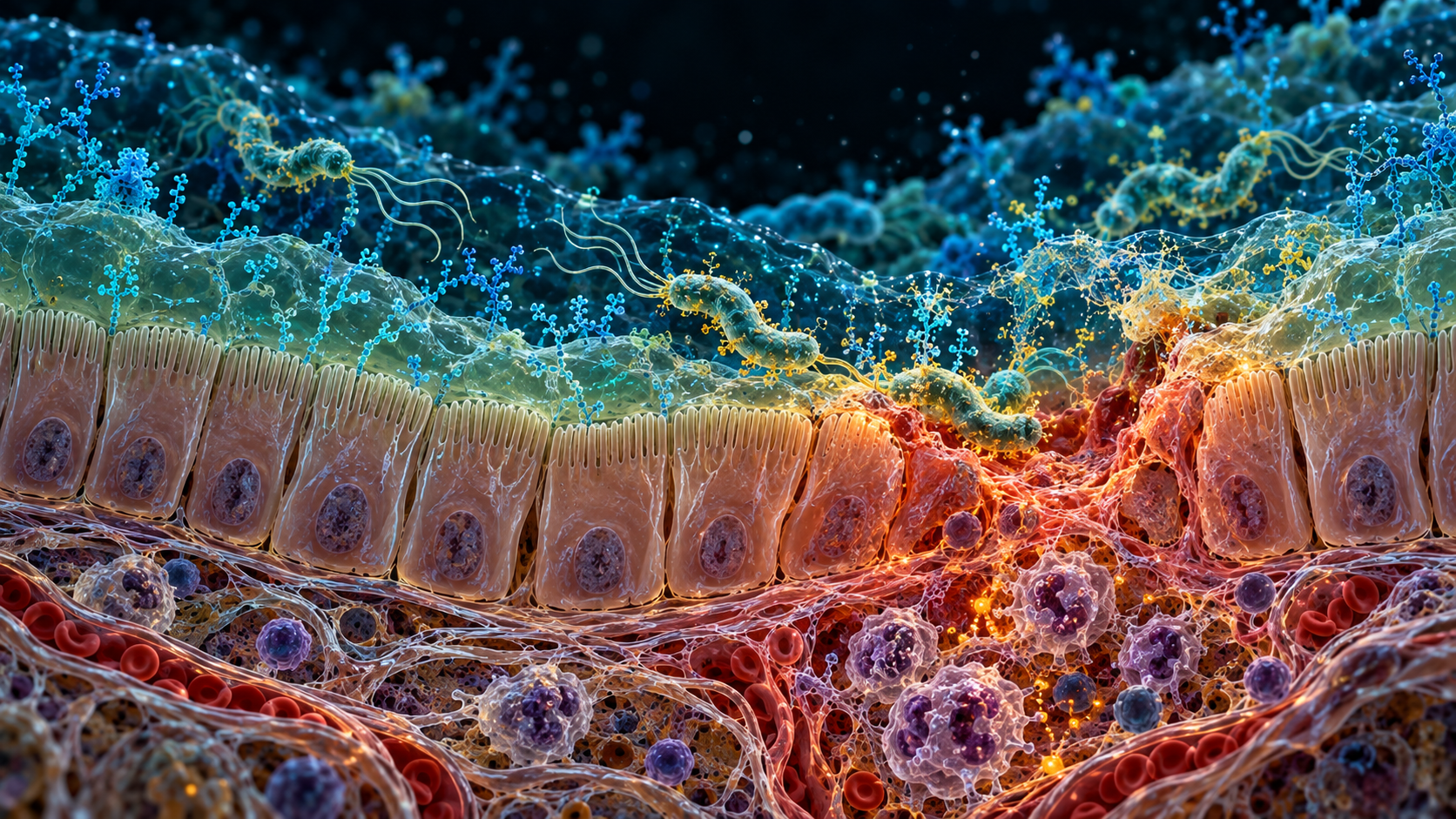
Does Helicobacter pylori infection cause peptic ulcers?
What you need to knowH. pylori is a well-established major cause of peptic ulcers, though ulcers can have other causes.Relative explanatory fit: Leading among models compared
Why the evidence supports this: Removing the infection supports the causal explanation. Other ulcer risks still matter.
Claim assessed: Helicobacter pylori infection is a major upstream cause of human peptic ulcer disease.
Finding: H. pylori infection is a major upstream cause of peptic ulcer disease: Θ, High confidence — its predictions hold across removal, prevention and temporal-order evidence, with one unresolved exception in long-term aspirin users.
Evidence scope: Targeted primary-record review: 23 ledger rows describing 22 studies (HEAT reported twice); 20 Tier A, 3 Tier B. Abstract depth except the HEAT full report (targeted passages). Not an exhaustive systematic review.
The grade applies to the stated claim. Model rankings and individual subclaim grades remain separate from the overall causal-evidence grade.
Full scientific assessment and references · Scorecard (JSON) · Review source (Markdown)
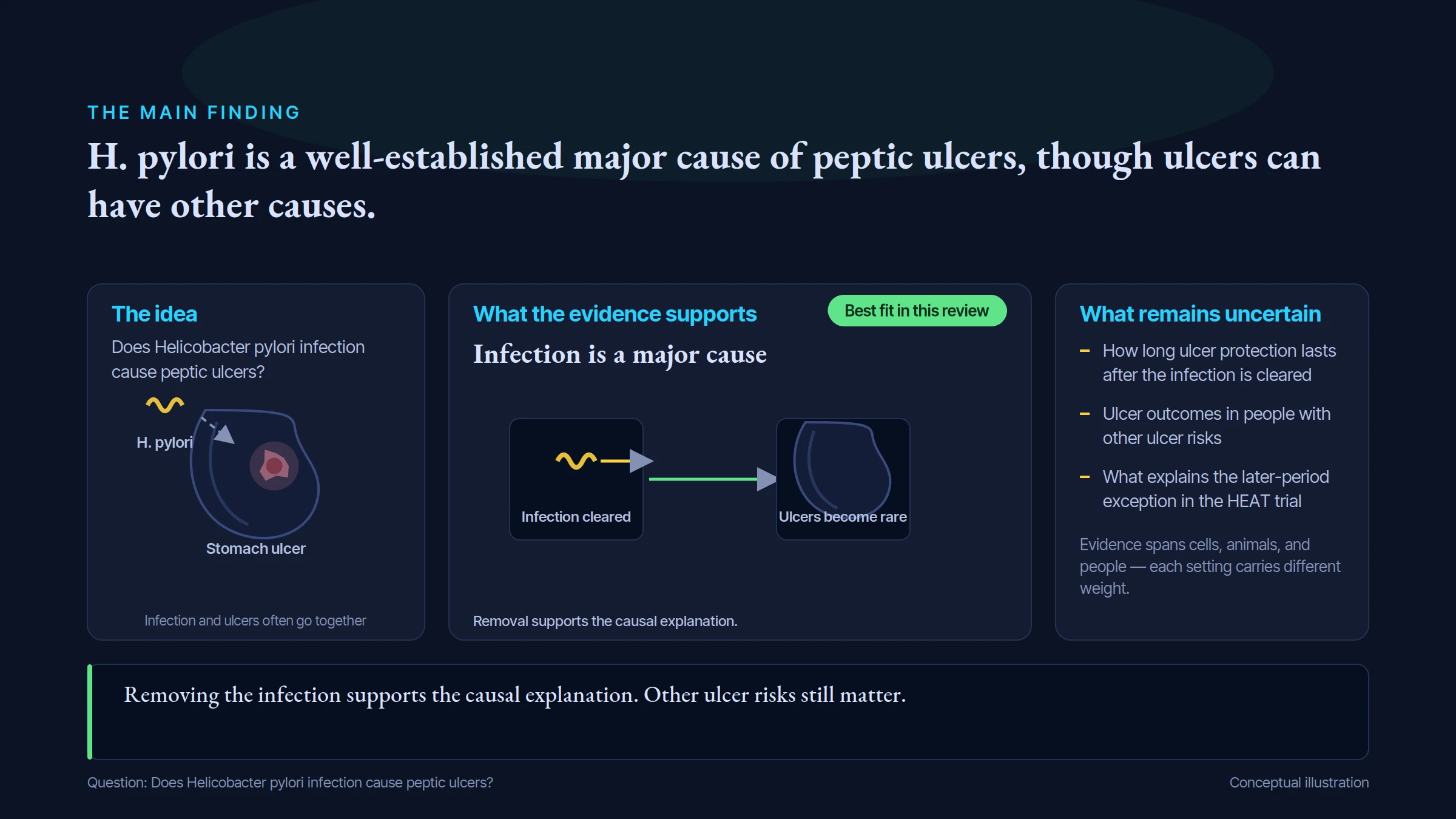
THE MAIN FINDING
H. pylori is a well-established major cause of peptic ulcers, though ulcers can have other causes.
The idea
Does Helicobacter pylori infection cause peptic ulcers?
Stomach ulcer
H. pylori
Infection and ulcers often go together
What the evidence supports
Best fit in this review
Infection is a major cause
Infection cleared
Ulcers become rare
Removal supports the causal explanation.
What remains uncertain
How long ulcer protection lasts after the infection is cleared
Ulcer outcomes in people with other ulcer risks
What explains the later-period exception in the HEAT trial
Evidence spans cells, animals, and people — each setting carries different weight.
Removing the infection supports the causal explanation. Other ulcer risks still matter.
Conceptual illustration
Question: Does Helicobacter pylori infection cause peptic ulcers?
This is the specific idea being tested.
Removing the infection supports the causal explanation. Other ulcer risks still matter.
This conclusion applies to the people, conditions and outcomes covered by the review.
The reviewed hypothesis ranks first among 5 models compared for this stated claim.
Claim under review: rank 1 among 5 compared models.
Leading explanation: H. pylori as a primary cause.
Position in this comparison: First rank.
The causal grade asks how well the stated causal claim is established. This comparison asks which of the assessed explanations fits the reviewed findings better. A leading explanation can remain unproven. Models can overlap or include the tested mechanism; an alternative ahead does not make that mechanism irrelevant. These ordinal ranks apply within this review; they do not measure the size of a difference or rank scientific strength across topics.
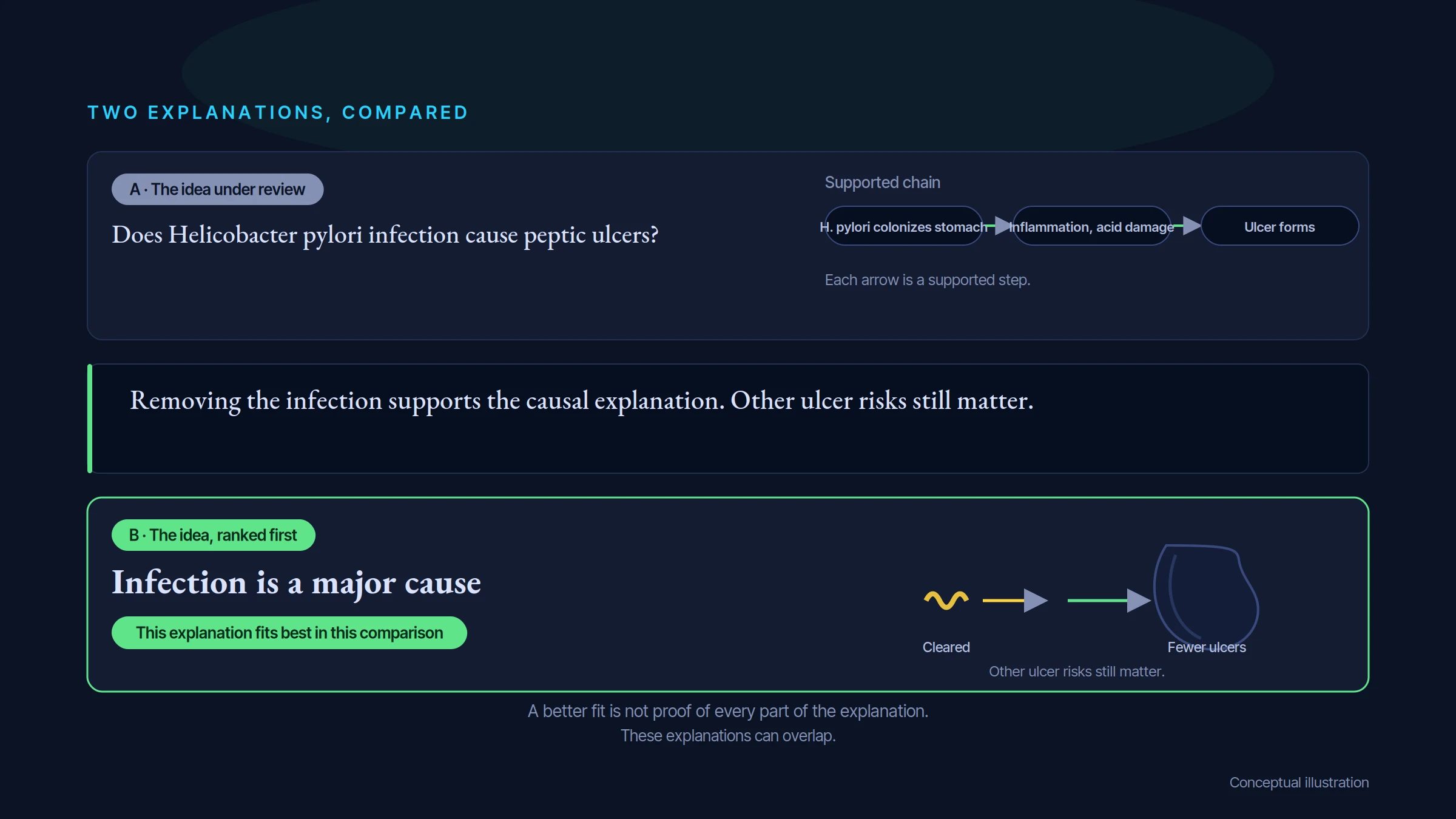
TWO EXPLANATIONS, COMPARED
A · The idea under review
Does Helicobacter pylori infection cause peptic ulcers?
Supported chain
H. pylori colonizes stomach
Inflammation, acid damage
Ulcer forms
Each arrow is a supported step.
Removing the infection supports the causal explanation. Other ulcer risks still matter.
B · The idea, ranked first
Infection is a major cause
This explanation fits best in this comparison
Cleared
Fewer ulcers
Other ulcer risks still matter.
A better fit is not proof of every part of the explanation.
These explanations can overlap.
Conceptual illustration
Very well established for the stated claim.
Removing the infection supports the causal explanation. Other ulcer risks still matter.
These explanations can overlap. Ranking their fit to the evidence is separate from deciding how firmly a cause has been established.
Rank 1: H. pylori as a primary cause — Helicobacter pylori infection is a major upstream cause of human peptic ulcer disease.
Rank 2: Heterogeneous multiple-cause model — Infection, medication injury and additional causes produce ulcers through host-dependent mucosal injury and acid-peptic exposure.
Rank 3: NSAID/aspirin-associated injury — Ulcerogenic medication is a causal driver in exposed patients, including patients whose H. pylori infection has been treated.
Rank 4: Autonomous acid-peptic model with infection as passenger — Acid-peptic injury explains the disease while infection has no upstream causal role.
Rank 5: Psychological stress as the dominant ulcer cause — Psychological stress is the main cause of peptic ulcer disease, with infection largely secondary.
Evidence rating: Θ · High confidence. How the evidence was assessed.
Removing the infection supports the causal explanation. Other ulcer risks still matter.
When testing confirms H. pylori in an appropriate clinical setting, treating the infection can help an ulcer heal and reduce the chance it returns. The evidence does not mean that every stomach symptom is an ulcer or that every ulcer has the same cause. It supports finding the cause rather than relying on acid suppression alone when infection is present.
Look for the proposed factor and the outcome, in the people or systems covered by the claim.
Infection is a major cause. Removing the infection supports the causal explanation. Other ulcer risks still matter.
Check lasting ulcer outcomes after infection is cleared, including in people with other ulcer risks.
These illustrations show the key questions tested in the review. They are conceptual drawings, not microscope images or experimental results.

H. pylori infection is a major upstream causal contributor to human peptic ulcer disease rather than a bystander of established mucosal damage.

Eradication treatment materially reduces subsequent ulcer recurrence in patients with infection and an ulcer documented before treatment.
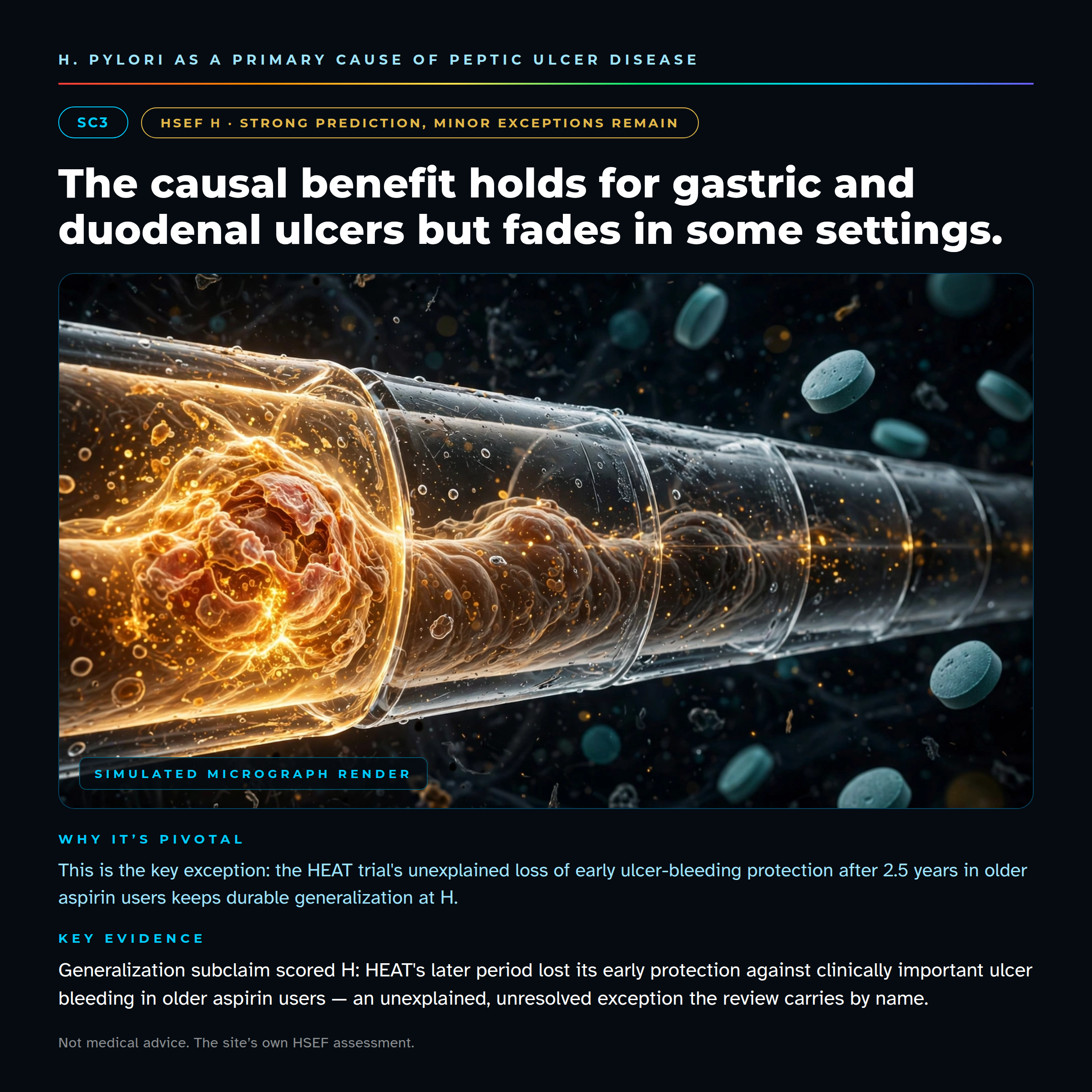
The causal contribution extends to both gastric and duodenal ulcers, while the magnitude and durability of benefit vary across clinical contexts.

WHAT WOULD MAKE THE ANSWER CLEARER
A research question
Check lasting ulcer outcomes after infection is cleared, including in people with other ulcer risks.
then
then
Clear the infection, then follow ulcer outcomes
Proposed test
Infection cleared
Lasting ulcer outcomes
tracked over time
Include people with other ulcer risks
Proposed test
People with other ulcer risks
Outcomes by risk group
compared separately
Confirm the temporal order
Proposed test
Infection
Ulcer
Infection comes first
Prevention designs
test the order directly
This storyboard shows the logic of a test. It does not show a result.
The question is how lasting and how general the causal effect is.
Conceptual illustration
Check lasting ulcer outcomes after infection is cleared, including in people with other ulcer risks.
Check that the intended change really happened.
Allow for other factors and compare with suitable controls.
Look for independent confirmation and the limits of the effect.
These are questions for research, not a claim that the proposed studies have already succeeded.
Proposed tests: 2 test design(s) are registered in the scorecard.
In plain terms, researchers would change the proposed cause, check that it changed as intended, then measure a meaningful outcome while controlling plausible alternatives. The result should be able to support or count against the claim—not only show that a pathway exists.
Study design: Use adequately powered prospective studies or independent cohorts with verified infection, clearance, medication exposure and ulcer status, and a prespecified prediction for clinical benefit over early and longer follow-up. Candidate strain/host modifiers must be measured before outcomes. This is a proposed design, not a named ongoing trial.
What would be measured: Adjudicated ulcer incidence, recurrence and ulcer bleeding in separately defined populations and time intervals.
Important controls: Do not pool different endpoints or select responders after observing outcomes. Account for acid suppression, continued NSAIDs/aspirin, reinfection, clearance failure and competing death. Do not withhold established treatment to recreate historical evidence.
Result that would support the claim: Replicated, prospectively specified benefit patterns and a reproducible explanation or externally validated boundary for the HEAT duration pattern.
Result that would count against it: In prospectively defined infection-positive populations, repeated, adequately powered, well-controlled comparisons show that durable removal does not reduce adjudicated ulcer outcomes over a prespecified interval, with confidence intervals excluding a prespecified clinically meaningful reduction. Such a result contradicts that population-and-time prediction; repeated failures across the principal settings would challenge the broad major-cause account. Affected participants must not be excluded afterward as not susceptible. A single context-specific null does not erase positive evidence elsewhere.
Study design: Randomize infected people at the start of long-term low-dose aspirin or NSAID therapy to eradication or placebo, with repeat testing for clearance and reinfection and adjudicated ulcer bleeding over at least five years, analysed in prespecified intervals. The HEAT investigators propose starters as the next population [14].
What would be measured: Adjudicated ulcer bleeding and complicated ulcer, by prespecified interval.
Important controls: Clearance and reinfection measured in both arms; co-prescribed acid suppression recorded; competing death.
Result that would support the claim: Benefit sustained across intervals in durably cleared participants.
Result that would count against it: Replicated loss of benefit after the early period in durably cleared participants, with precise intervals.
Follow the studies, detailed comparisons and evidence ratings behind this guide.
Open the scientific review →