The question
Is cigarette smoking a major cause of lung cancer?
This is the specific idea being tested.
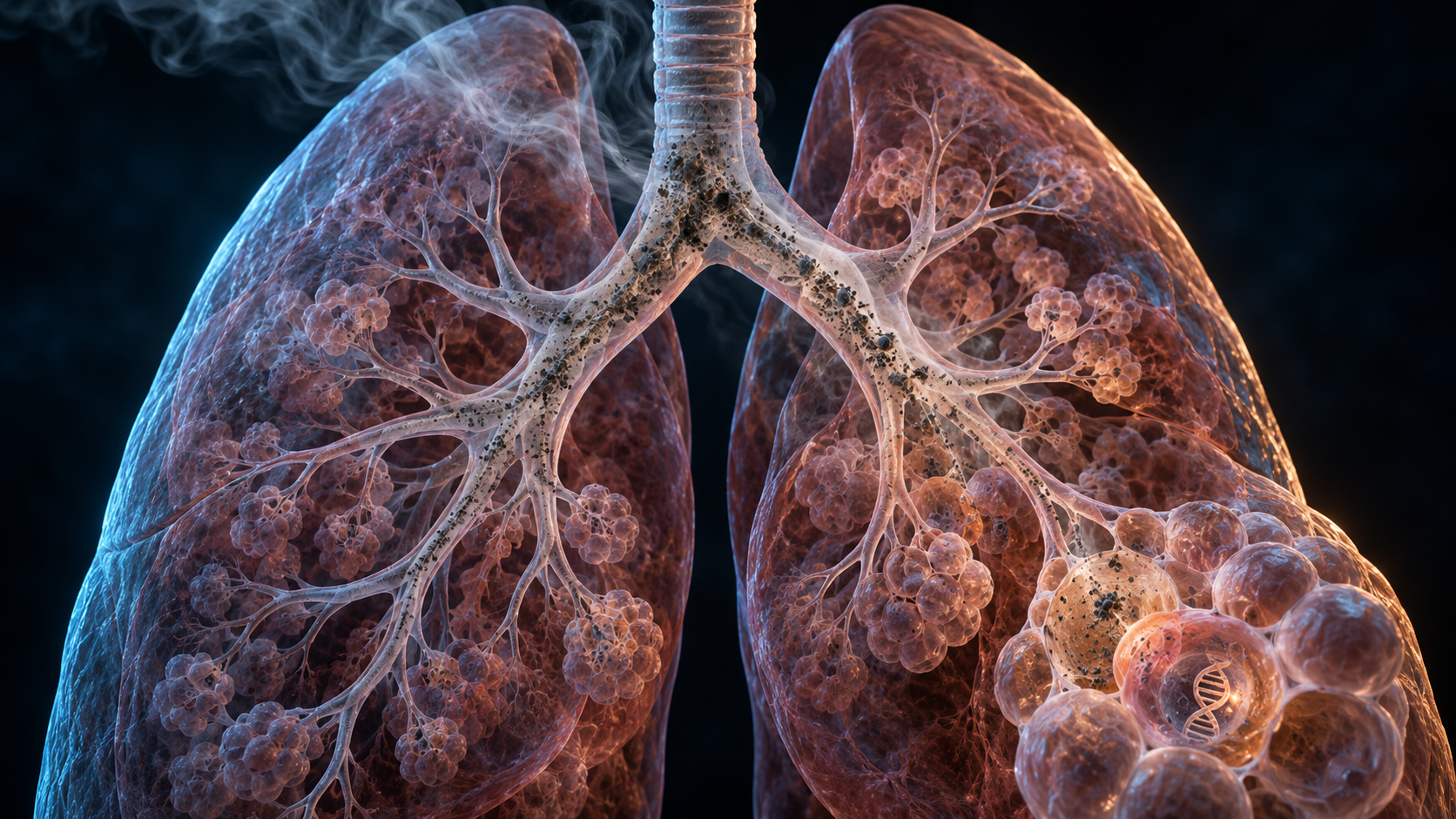
Is cigarette smoking a major cause of lung cancer?
What you need to knowSmoking is a well-established major cause of lung cancer. Stopping reduces risk, though smoking does not cause every lung cancer.Relative explanatory fit: Leading among models compared
Why the evidence supports this: Exposure patterns, reduced risk after stopping, tumour mutations and animal experiments support the same explanation.
Claim assessed: Sustained cigarette smoking causally initiates a substantial (major) share of human lung carcinomas, as shown by exposure-response across independent populations, incidence decline after cessation, and a carcinogen mechanism that leaves a dose-scaled molecular fingerprint in the tumours.
Finding: The central claim is a population-level causal-initiation claim, carried by SC1 at Theta. Under the prescribed scope-matched rule the overall equals SC1 (Theta); primary-subclaim agrees, and weakest-link would return Zeta only because the mechanistic subclaim SC3 is deliberately held at Zeta for partial co-dependence of its human molecular lines. Theta is warranted: exposure-response across independent populations, incidence decline after cessation, a dose-scaled carcinogen mutational signature in tumours, and animal carcinogenicity converge, each excluding a different confounder, and the framework and cancer rubric name this exposure-carcinoma pair as a top-of-ladder calibration case. Omega is blocked because smoking is neither necessary (never-smoker cancers, EGFR-mutant subset) nor sufficient (most smokers never develop lung cancer).
Evidence scope: Primary literature 1950-2016 plus consensus reviews; every identifier resolved against PubMed. Two identifiers recalled during drafting resolved to unrelated papers and were corrected before use.
The grade applies to the stated claim. Model rankings and individual subclaim grades remain separate from the overall causal-evidence grade.
Full scientific assessment and references · Scorecard (JSON) · Review source (Markdown)
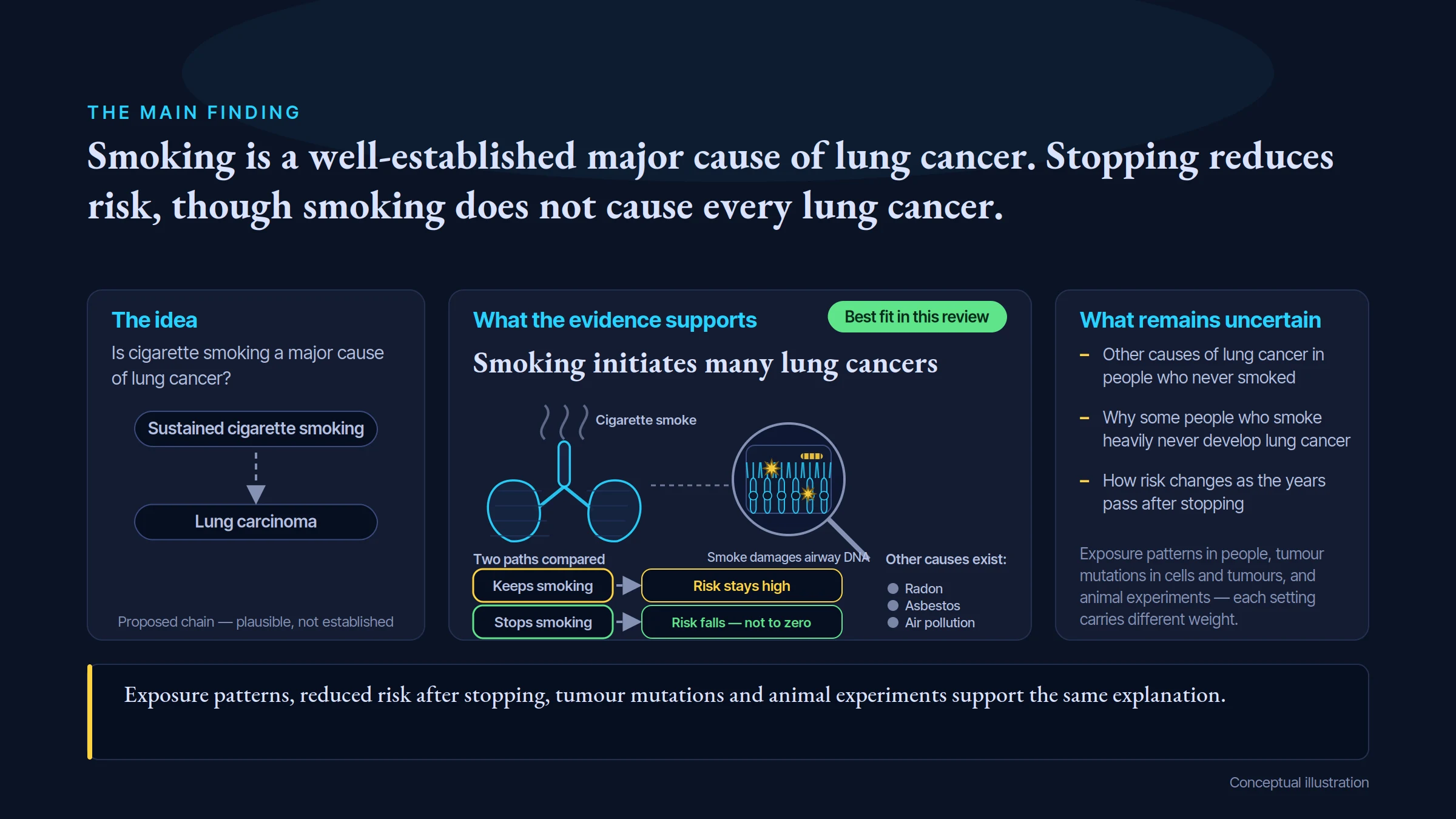
THE MAIN FINDING
Smoking is a well-established major cause of lung cancer. Stopping reduces risk, though smoking does not cause every lung cancer.
The idea
Is cigarette smoking a major cause of lung cancer?
Sustained cigarette smoking
Lung carcinoma
Proposed chain — plausible, not established
What the evidence supports
Best fit in this review
Smoking initiates many lung cancers
Cigarette smoke
Smoke damages airway DNA
Two paths compared
Keeps smoking
Risk stays high
Stops smoking
Risk falls — not to zero
Other causes exist
Radon
Asbestos
Air pollution
What remains uncertain
Other causes of lung cancer in people who never smoked
Why some people who smoke heavily never develop lung cancer
How risk changes as the years pass after stopping
Exposure patterns in people, tumour mutations in cells and tumours, and animal experiments — each setting carries different weight.
Exposure patterns, reduced risk after stopping, tumour mutations and animal experiments support the same explanation.
Conceptual illustration
This is the specific idea being tested.
Exposure patterns, reduced risk after stopping, tumour mutations and animal experiments support the same explanation.
This conclusion applies to the people, conditions and outcomes covered by the review.
The reviewed hypothesis ranks first among 4 models compared for this stated claim.
Claim under review: rank 1 among 4 compared models.
Leading explanation: Smoking as a major causal initiator.
Position in this comparison: First rank.
The causal grade asks how well the stated causal claim is established. This comparison asks which of the assessed explanations fits the reviewed findings better. A leading explanation can remain unproven. Models can overlap or include the tested mechanism; an alternative ahead does not make that mechanism irrelevant. These ordinal ranks apply within this review; they do not measure the size of a difference or rank scientific strength across topics.
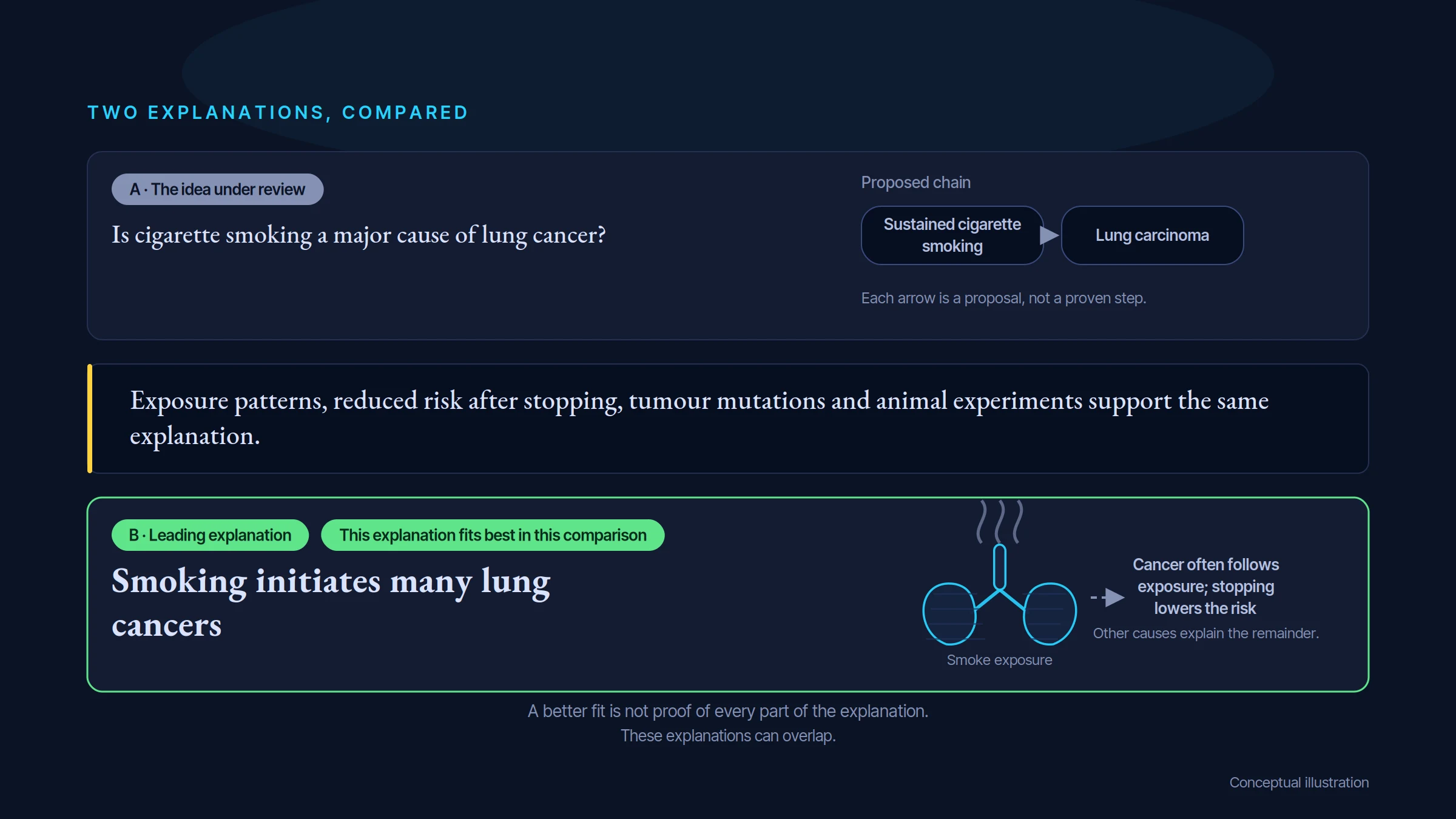
TWO EXPLANATIONS, COMPARED
A · The idea under review
Is cigarette smoking a major cause of lung cancer?
Proposed chain
Sustained cigarette smoking
Lung carcinoma
Each arrow is a proposal, not a proven step.
Exposure patterns, reduced risk after stopping, tumour mutations and animal experiments support the same explanation.
B · Leading explanation
This explanation fits best in this comparison
Smoking initiates many lung cancers
Smoke exposure
Cancer often follows exposure; stopping lowers the risk
Other causes explain the remainder.
A better fit is not proof of every part of the explanation.
These explanations can overlap.
Conceptual illustration
Very well established for the stated claim.
Exposure patterns, reduced risk after stopping, tumour mutations and animal experiments support the same explanation.
These explanations can overlap. Ranking their fit to the evidence is separate from deciding how firmly a cause has been established.
Rank 1: Smoking as a major causal initiator — Sustained cigarette smoking causally initiates a major share of lung carcinomas via carcinogen-induced DNA damage.
Rank 2: Multiple-cause / multifactorial model — Lung carcinoma has several causes (radon, air pollution, occupational carcinogens, inherited susceptibility, never-smoker pathways) with smoking the largest contributor.
Rank 3: Constitutional / confounding-only hypothesis (Fisher) — A shared genetic or constitutional factor causes both the propensity to smoke and lung cancer, so the association is non-causal.
Rank 4: Reverse causation / detection artifact — Preclinical disease drives smoking behaviour, or smokers are simply detected more, generating a spurious association.
Evidence rating: Θ · High confidence. How the evidence was assessed.
Exposure patterns, reduced risk after stopping, tumour mutations and animal experiments support the same explanation.
For human health, the causal evidence supports preventing smoking initiation and supporting cessation at any stage; stopping reduces risk over time even though it does not erase past exposure immediately. It also supports taking respiratory symptoms seriously and using evidence-based cessation and screening pathways where a person meets local eligibility criteria. The conclusion is about risk and prevention, not blame: nicotine dependence is a treatable condition, and non-smokers with symptoms also deserve evaluation.
Look for the proposed factor and the outcome, in the people or systems covered by the claim.
Smoking initiates many lung cancers. Exposure patterns, reduced risk after stopping, tumour mutations and animal experiments support the same explanation.
Compare exposure and cessation patterns with cancer outcomes and molecular evidence of smoke-related damage.
These illustrations show the key questions tested in the review. They are conceptual drawings, not microscope images or experimental results.
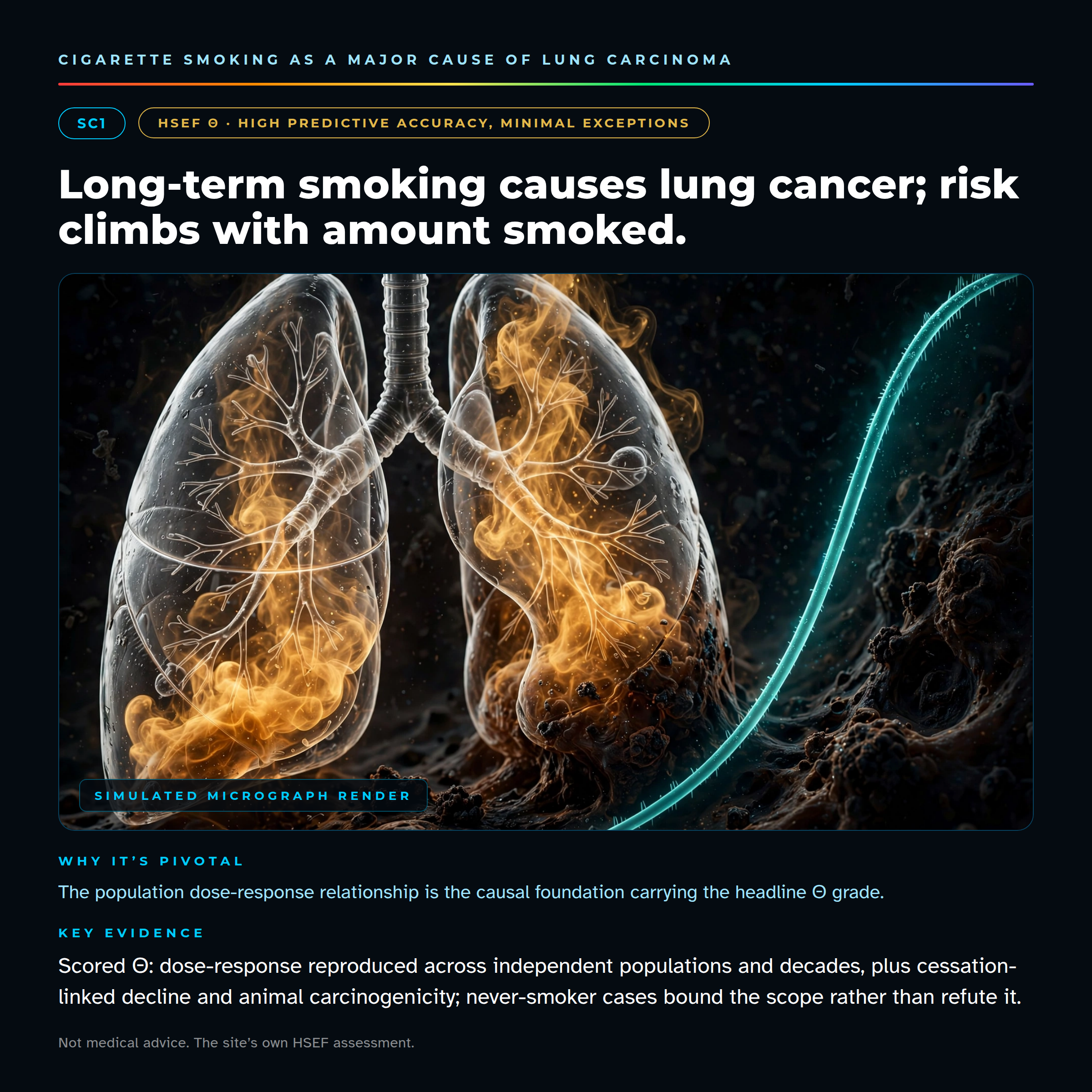
Sustained cigarette smoking causally increases lung-carcinoma incidence at the population level, with risk rising with exposure (a major, substantial share of cases).
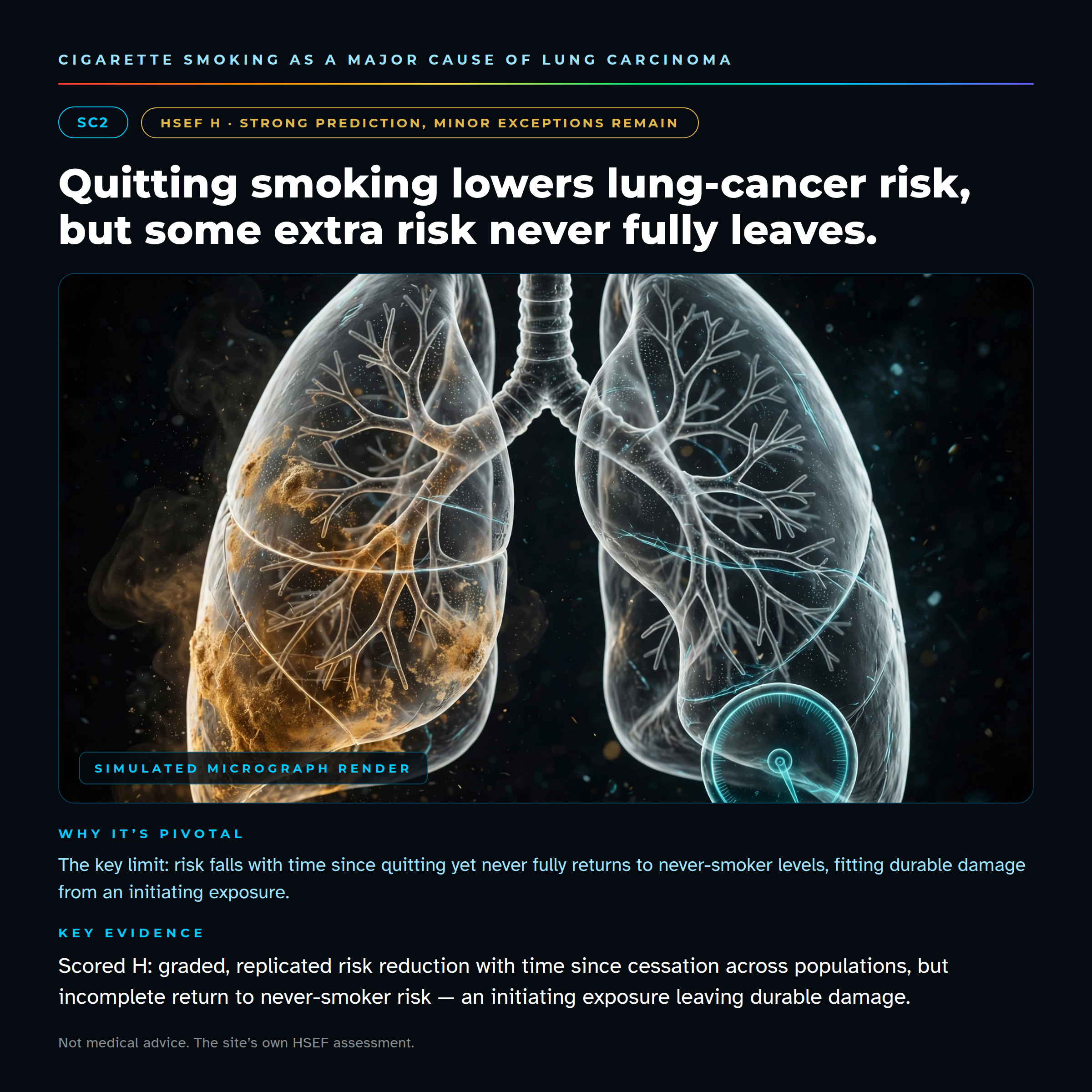
Stopping smoking reduces subsequent lung-cancer risk relative to continued smoking, with risk falling as time since cessation increases, though residual risk persists.
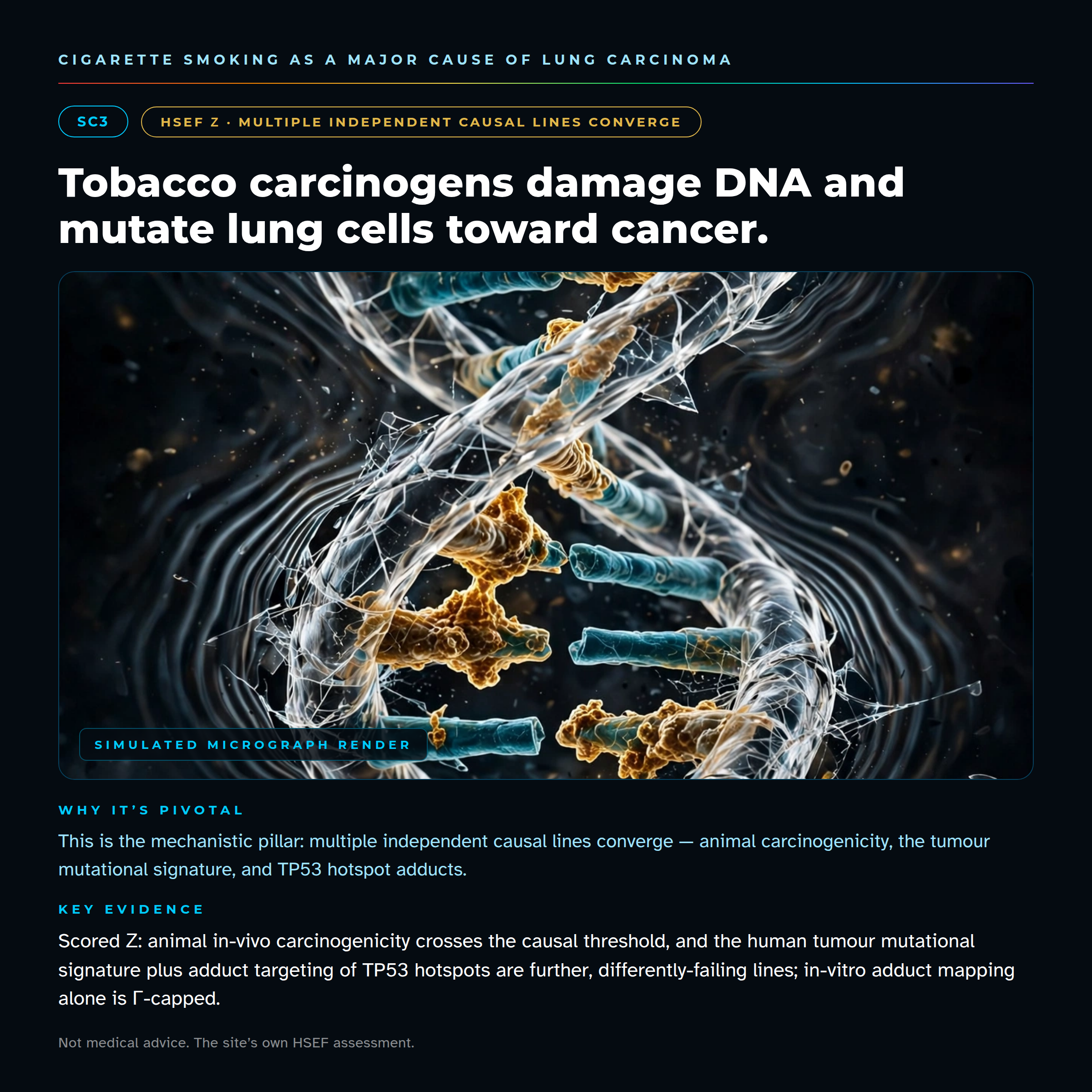
Tobacco-smoke carcinogens contribute mechanistically to lung carcinogenesis through DNA damage and somatic mutation.
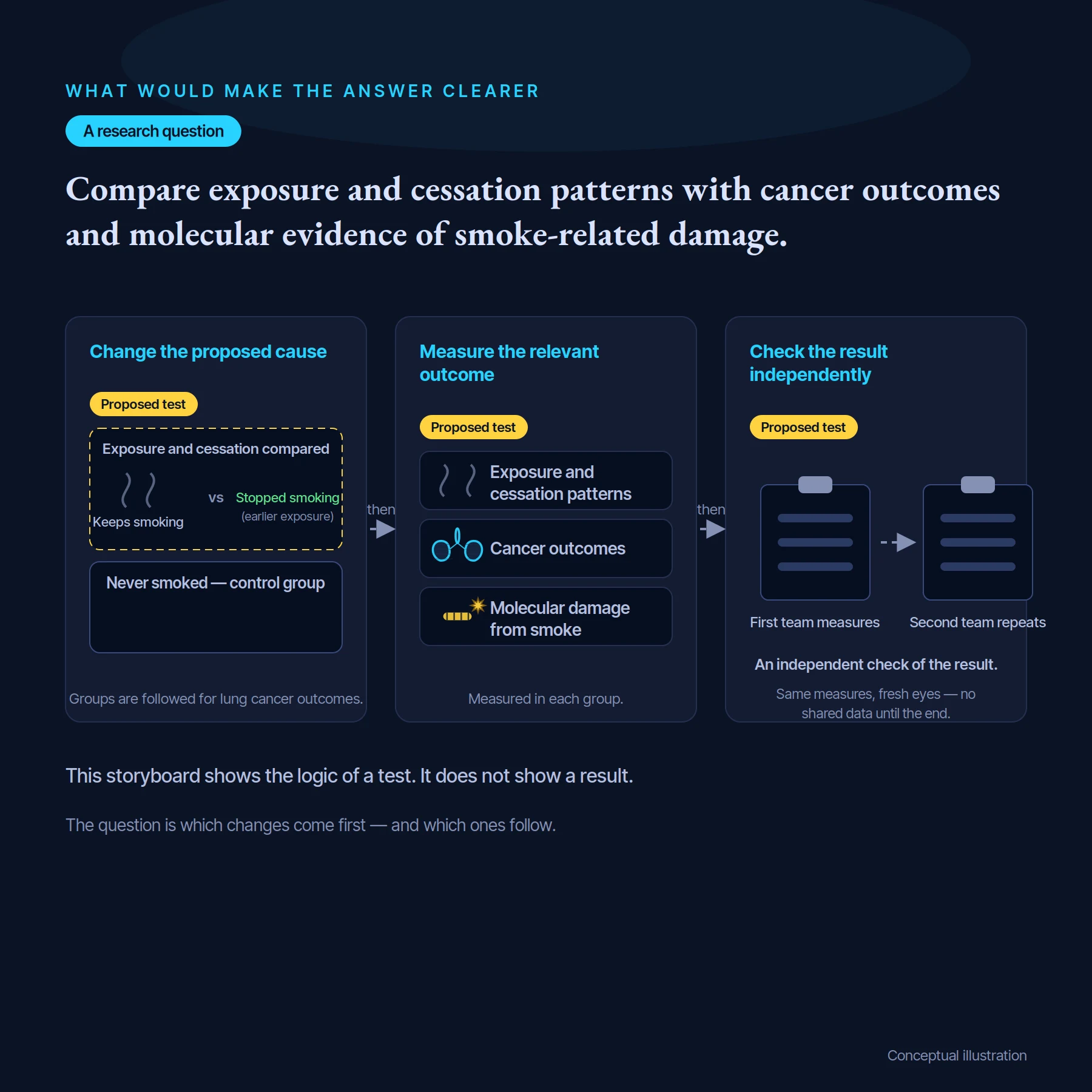
WHAT WOULD MAKE THE ANSWER CLEARER
A research question
Compare exposure and cessation patterns with cancer outcomes and molecular evidence of smoke-related damage.
then
then
Change the proposed cause
Proposed test
Exposure and cessation compared
Keeps smoking
Stopped smoking
Earlier exposure
Never smoked — control group
Groups are followed for lung cancer outcomes.
Measure the relevant outcome
Proposed test
Exposure and cessation patterns
Cancer outcomes
Molecular damage from smoke
Measured in each group.
Check the result independently
Proposed test
First team measures
Second team repeats
An independent check of the result.
Same measures, fresh eyes — no shared data until the end.
This storyboard shows the logic of a test. It does not show a result.
The question is which changes come first — and which ones follow.
Conceptual illustration
Compare exposure and cessation patterns with cancer outcomes and molecular evidence of smoke-related damage.
Check that the intended change really happened.
Allow for other factors and compare with suitable controls.
Look for independent confirmation and the limits of the effect.
These are questions for research, not a claim that the proposed studies have already succeeded.
Proposed tests: 2 test design(s) are registered in the scorecard.
In plain terms, researchers would change the proposed cause, check that it changed as intended, then measure a meaningful outcome while controlling plausible alternatives. The result should be able to support or count against the claim—not only show that a pathway exists.
Study design: Combine harmonized lifetime-exposure cohorts across populations with tumour genome sequencing to link pack-year dose to the tobacco mutational-signature burden and to incidence.
What would be measured: Incidence and signature burden as a function of cumulative exposure across independent populations.
Important controls: Never-smoker and radon-exposed comparison strata; adjustment for competing causes.
Result that would support the claim: Monotonic dose-response of both incidence and the carcinogen signature across populations.
Result that would count against it: Incidence and signature burden fail to track cumulative exposure once competing causes are controlled.
Study design: Follow matched continuing and quitting smokers with serial risk and, where tumours arise, signature analysis, measuring how residual risk and mutational burden decay with time since quitting.
What would be measured: Time-since-quit trajectory of incidence and of carcinogen-signature burden.
Important controls: Reverse-causation checks (exclude quitting driven by preclinical disease).
Result that would support the claim: Graded decline in risk and signature burden with time since cessation, with a persistent residual.
Result that would count against it: Risk does not fall with cessation after excluding reverse causation.
Follow the studies, detailed comparisons and evidence ratings behind this guide.
Open the scientific review →